



Obtaining visas as a remote worker can be difficult to navigate as there can be a lot of conflicting information. Here at Noma, we're all about making your remote work journey as effortless as possible. We've put together a guide to the entry rules and longer-stay options for destinations we've hosted Noma Editions in.
Last reviewed: November 2026. Entry rules change often and depend on the passport you hold, so treat this guide as a starting point and confirm the details with the official source linked in each section before you book. This is general information, not legal or immigration advice.
One thing applies everywhere: entering as a visitor lets you stay, but it does not automatically give you the right to work for local clients or a local employer. Most Noma members keep working for their employer or clients back home, which is what the remote-worker visas below are designed for. If you're unsure how your own situation fits, check with the country's embassy before you travel.
Panama
Many visitors, including UK passport holders, can stay in Panama for up to three months without a visa when arriving by land or air. Some nationalities are granted a longer stay, so check with your nearest Panamanian embassy for the rules that apply to your passport.
You can't normally extend a visitor stay, and leaving for a neighbouring country and coming straight back to reset the clock is risky: immigration officials can refuse or detain travellers who try it.
If you want to stay longer, Panama offers a Short-Stay Visa for Remote Workers. It has been issued for nine months and can be renewed once for a further nine, and it asks for proof of foreign income of around US$3,000 a month. The application has to be made through a Panamanian immigration lawyer, who will confirm the current fees and paperwork.
What you'll typically need
- Valid passport and certified copies
- Passport photos
- Proof of remote work: an employment letter on company letterhead, or a notarised statement of your business if you're self-employed
- Proof of income that meets the minimum requirement
- Health insurance covering your stay
- Certificate of good health
- Clean criminal record certificate
Buenos Aires

Citizens of many countries, including the UK, the US, Canada, Australia, New Zealand and EU member states, can visit Argentina without a visa for tourism for up to 90 days. Argentina no longer stamps passports on entry, so keep your own record of the date you arrived.
If you'd like another 90 days, speak to the Argentine migration office (Migraciones) before your current stay ends.
Argentina also offers a Digital Nomad Visa for citizens of countries that don't need a tourist visa. It is issued for 180 days and can be renewed once for a further 180. You apply online through the Migraciones portal, where the current fees are listed.
What you'll typically need
- Completed application form
- Passport valid for at least six months, with blank pages
- Passport photo
- Proof of remote employment or freelance contracts, and a short CV
- Proof of sufficient income
- Proof of the visa fee payment
Bear in mind that foreign documents usually need an apostille and an official Spanish translation before you upload them.
Costa Rica
Visitors from the UK, and from many other countries including the US, Canada and EU member states, can be admitted to Costa Rica without a visa for up to 180 days. The exact number of days is decided by the immigration officer when you arrive, so check the stamp in your passport. Overstaying is fined at US$100 a month and can affect future visits.
If you want more certainty or a longer stay, you can apply for the Costa Rica digital nomad visa. It requires a stable income from outside Costa Rica of at least US$3,000 a month, or US$4,000 if you're bringing family. It runs for one year and can be renewed for a second. Holders are exempt from Costa Rican income tax on their foreign earnings, and can open a local bank account and drive on their home licence.
What you'll typically need
- Valid passport
- Application form and proof of the application fee payment
- Bank statements showing you meet the monthly income requirement
- A signed declaration that you'll be working remotely for income from outside Costa Rica
- Medical insurance covering your whole stay
Documents that aren't in Spanish must be translated by a recognised translator.
Antigua, Guatemala

Citizens of the UK, the US, Canada, Australia, New Zealand and most European countries can visit Guatemala for up to 90 days without a visa.
Guatemala is part of the CA-4 agreement with El Salvador, Honduras and Nicaragua. The 90 days are shared across all four countries, so hopping over one of those borders does not reset your stay.
If you wish to stay longer, apply for an extension at the Guatemalan Institute of Migration in Guatemala City before your 90 days are up. Lines can be long, so go early. If you overstay, you'll have to pay a fine before you can leave the country.
What you'll typically need for an extension
- Completed application form
- Valid passport showing your last entry stamp
- An onward travel ticket, an international credit card, or a Guatemalan guarantor
- Receipt for the extension fee, paid at a local bank
Belize
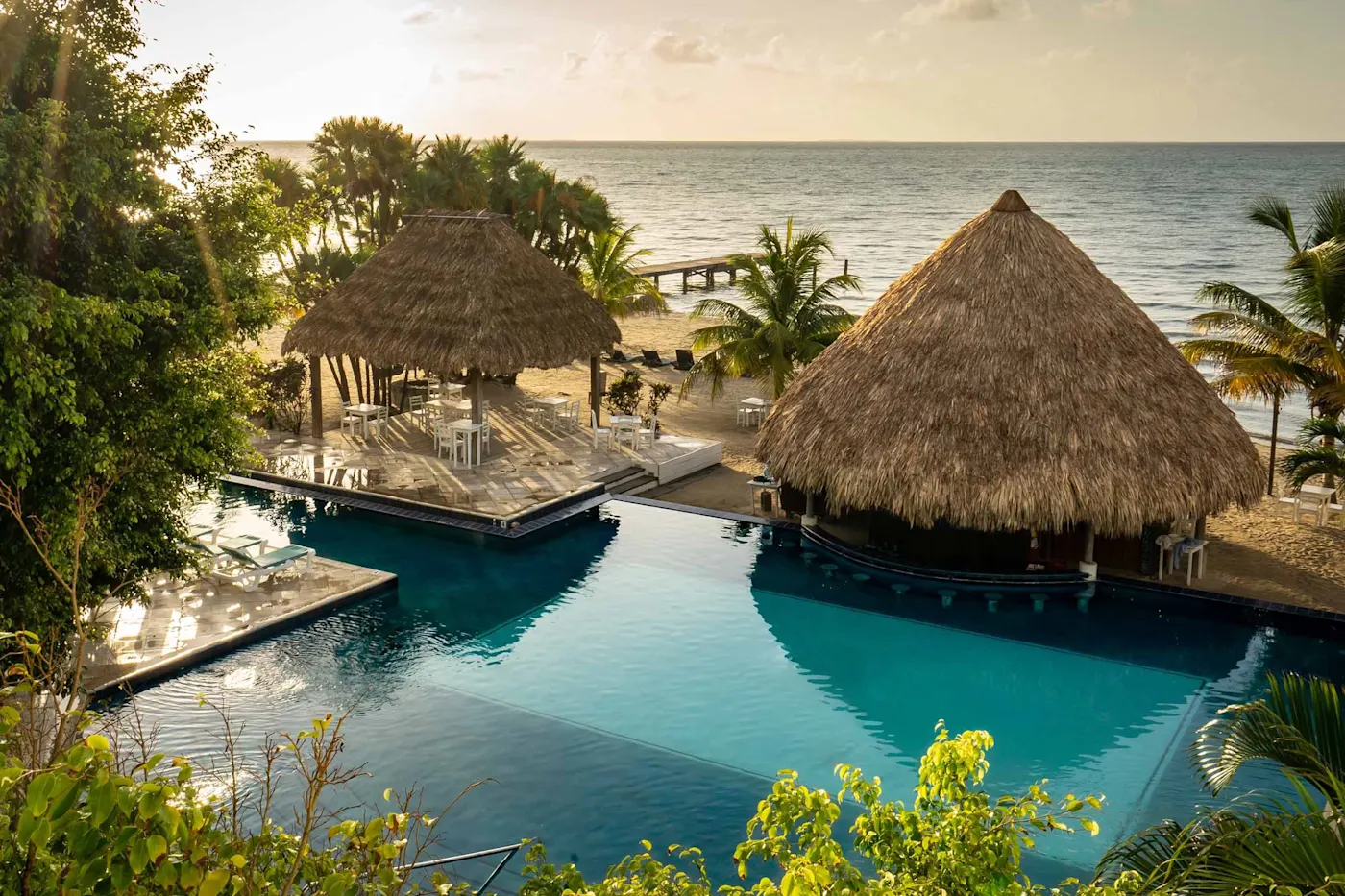
Citizens of the UK, the US, Canada, Australia, the Schengen area and most Central and South American countries can visit Belize visa-free for 30 days.
To stay longer, visit an office of the Belize Immigration and Nationality Department before your stamp runs out and ask for an extension. Each additional 30 days costs 200 Belize dollars (about US$100).
Belize has also run a long-stay permit for remote workers called Work Where You Vacation, which allowed stays of up to six months for people employed outside Belize who met a minimum income requirement. Check with Belize Immigration that the programme is open and what the current criteria are before you plan around it.
Morocco

Citizens of the UK, the US and EU member states can visit Morocco without a visa for up to 90 days for tourism.
To stay longer than 90 days you need to request an extension at a Moroccan police station before your stay ends. For a longer-term stay you would apply there for a carte de séjour, the residency card required to live in Morocco.
What you'll typically need
- Proof of long-term accommodation in Morocco
- Clean criminal record
- Certificate of good health
- A bank certificate proving sufficient funds
- Proof of employment is sometimes required
Barcelona

EU, EEA and Swiss citizens can live and work in Spain freely. Visitors from visa-exempt countries such as the UK, the US, Canada and Australia can spend up to 90 days in any 180-day period in the Schengen area, which includes Spain. That limit covers all Schengen countries combined, not each one separately.
Two EU border systems affect these visitors. The Entry/Exit System (EES) is now in place: on your first trip you register your fingerprints and a photo at the border, at no cost. ETIAS, the €20 online travel authorisation, was not yet in operation when this guide was last reviewed. See our guide to EES and ETIAS for more.
If you are a non-EU remote worker and want to stay longer, you can apply for Spain's Digital Nomad Visa. For 2026 the minimum income for a single applicant is about €2,849 a month (200% of Spain's minimum wage), and more if you're bringing family.
If you apply at a Spanish consulate abroad, the visa is issued for up to one year. If you apply from inside Spain while there legally, you can receive a residence permit of up to three years. Either way it can be renewed, up to five years in total.
Employees generally need to show that Spanish social security is covered. For US employees that usually means a certificate of coverage from the US Social Security Administration, so check with your employer and the consulate early. Freelancers can qualify too, as long as no more than a fifth of their income comes from Spanish clients.
What you'll typically need
- Valid passport (original and copy)
- National visa application form
- Proof you've worked for your employer or clients for at least three months
- Proof the company you work for has existed for at least a year
- A letter from your employer authorising you to work remotely from Spain
- Proof of income that meets the minimum requirement
- A university degree or at least three years of relevant work experience
- Health insurance valid in Spain
- Clean criminal record certificate
Foreign documents must be apostilled and translated into Spanish. Once you arrive, you'll register your fingerprints for your residency card (TIE), which also gives you the NIE number you need to open a bank account.
Lisbon

EU, EEA and Swiss citizens can live and work in Portugal freely. Visitors from visa-exempt countries such as the UK and the US can stay for up to 90 days in any 180-day period across the Schengen area, and the same EES and ETIAS rules described in the Barcelona section apply.
To stay longer as a remote worker, look at Portugal's digital nomad visa, often called the D8. For 2026 it requires an average income of at least €3,680 a month (four times the Portuguese minimum wage). It comes in two forms: a temporary-stay visa for stays of up to a year, and a residence visa that leads to a renewable residence permit.
What you'll typically need
- Valid passport (original and copy)
- National visa application form
- Two passport photos
- Proof of a remote work contract or self-employment
- Proof of income for the last three months that meets the minimum requirement
- Valid travel and medical insurance
- Clean criminal record certificate
- Proof of accommodation in Portugal
- Proof of the visa fee payment
You apply through the Portuguese consulate or visa centre for the country you live in. Processing commonly takes a couple of months, so start early.
Kenya

Kenya replaced its visitor visas with an Electronic Travel Authorisation (eTA). Most visitors, including those from the UK, the US, the EU, Australia and New Zealand, must apply online on the official eTA website before they travel. The Kenyan authorities recommend applying at least two weeks before departure. Citizens of some countries, including many in Africa, are exempt.
Since 5 October 2026, most travellers visiting Kenya for less than 12 months must also hold Kenyan Government-provided travel health insurance, which you buy as part of the eTA application. Your own travel insurance is not accepted in its place, although we'd still recommend having it.
For longer stays, Kenya has introduced a digital nomad permit (Class N) for people who work remotely for employers or clients outside Kenya. Requirements include proof of foreign income and of accommodation in Kenya. Check the Kenyan Department of Immigration for the current criteria and fees.
What you'll typically need for the eTA
- Passport valid for at least six months after arrival
- A passport-style photo
- Your flight details
- Proof of accommodation
- A card to pay the eTA and insurance fees